
Video Wall Solution
video wall solution that consists of multiple panels tiled together contiguously or overlapped in order to form single large screen beyond panels more than 98inch.
Typical display technologies include
→ LCD panels
→ Direct View LED arrays & Laser Phosphor Displays
An LED-backlit LCD is a flat-panel display that utilizes LED technology for backlighting, replacing traditional CCFL (cold cathode fluorescent) systems. This results in improved brightness, energy efficiency, and overall display performance.
When multiple LCD/LED panels are combined to form a larger display, a visible line may appear between the screens. This gap is known as the bezel width—the physical spacing between adjacent panels. Typical bezel sizes include 3.5 mm, 1.8 mm, and ultra-narrow 0.8 mm, which directly impact the visual continuity of the display.
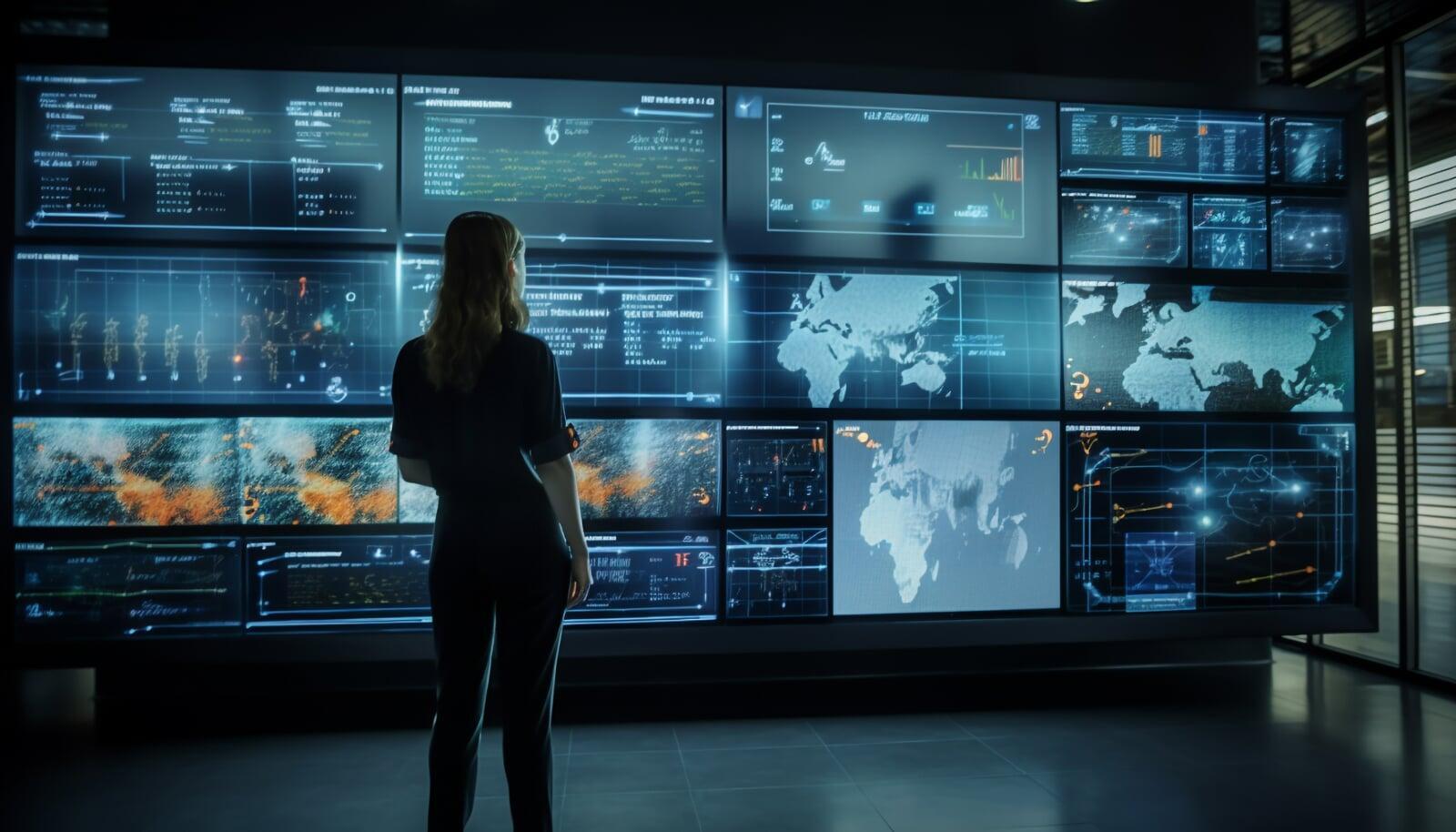
LED video walls are made up of Direct LED displays (also known as SMD LED), seamlessly working together to present content as one unified screen. Each LED element generates its own light, resulting in superior brightness, energy efficiency, and vivid image quality.
These displays are suitable for both indoor and outdoor environments, offering exceptional flexibility and scalability for high-performance video wall applications. Whether it’s premium solutions for mission-critical viewing and Active 3D experiences or cost-effective options for impactful visual installations, LED video walls deliver powerful and immersive content.
They are ideal for engaging audiences, communicating information effectively, and creating visually compelling experiences across various environments.
A video wall controller (also known as a processor) is a system that distributes and manages visual content across multiple displays, allowing them to function as a single large screen. It divides one input source into multiple sections, assigning each portion to a specific display within the video wall.
Video wall controllers are generally categorized into hardware-based and software-based solutions, depending on the processing method and system architecture.
A basic example of a video wall controller is a single-input, multi-output scaler, which takes one video source and splits it into multiple segments to match the layout of the connected displays.
Hardware-based controllers are purpose-built electronic devices designed specifically for video processing applications. They are typically developed using dedicated video processing chipsets and operate without a conventional operating system.
These controllers are known for their high performance, stability, and reliability, making them ideal for mission-critical video wall environments.
Software-based video wall controllers are built on PC or server platforms and operate using standard operating systems such as Windows, Linux, or macOS. These systems are typically equipped with specialized multi-output graphics cards and may also include video capture cards for handling multiple input sources. They are often housed in industrial-grade chassis for enhanced durability and continuous operation.
One of the key advantages of software-based controllers is their ability to run various applications directly on the video wall. These include mapping tools, VoIP clients for IP camera monitoring, SCADA systems, and digital signage software—fully utilizing the native resolution of the entire display wall.
Due to their flexibility and scalability, these controllers are widely deployed in control rooms and advanced digital signage environments